Document reconciliation for any industry, without changing how you work

ADAM reads the documents your suppliers already send, matches them against each other, and tells you what does not line up. The capture, extraction, reconciliation and reporting spine is configuration, not custom code: one production customer runs entirely on it with nothing built specifically for them. Your team keeps its mailbox, its spreadsheets and its ERP.

Fuel stations

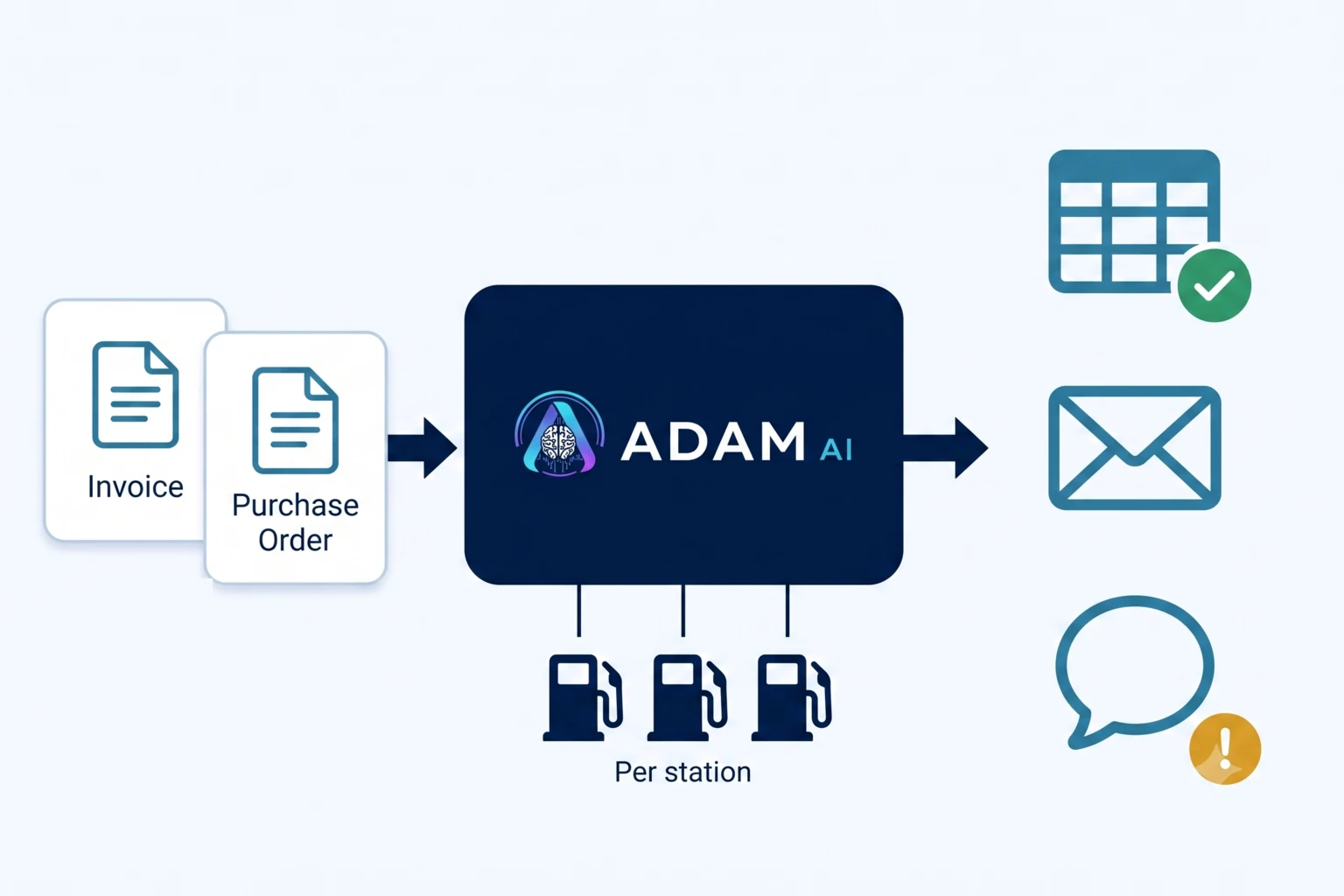
Match each invoice to its purchase order across every site in a network, litres per station per date.

Fuel stations
An invoice and a purchase order feeding into ADAM, compared per station, with results going to a spreadsheet, an email report and a messaging digest

Telecom carriers

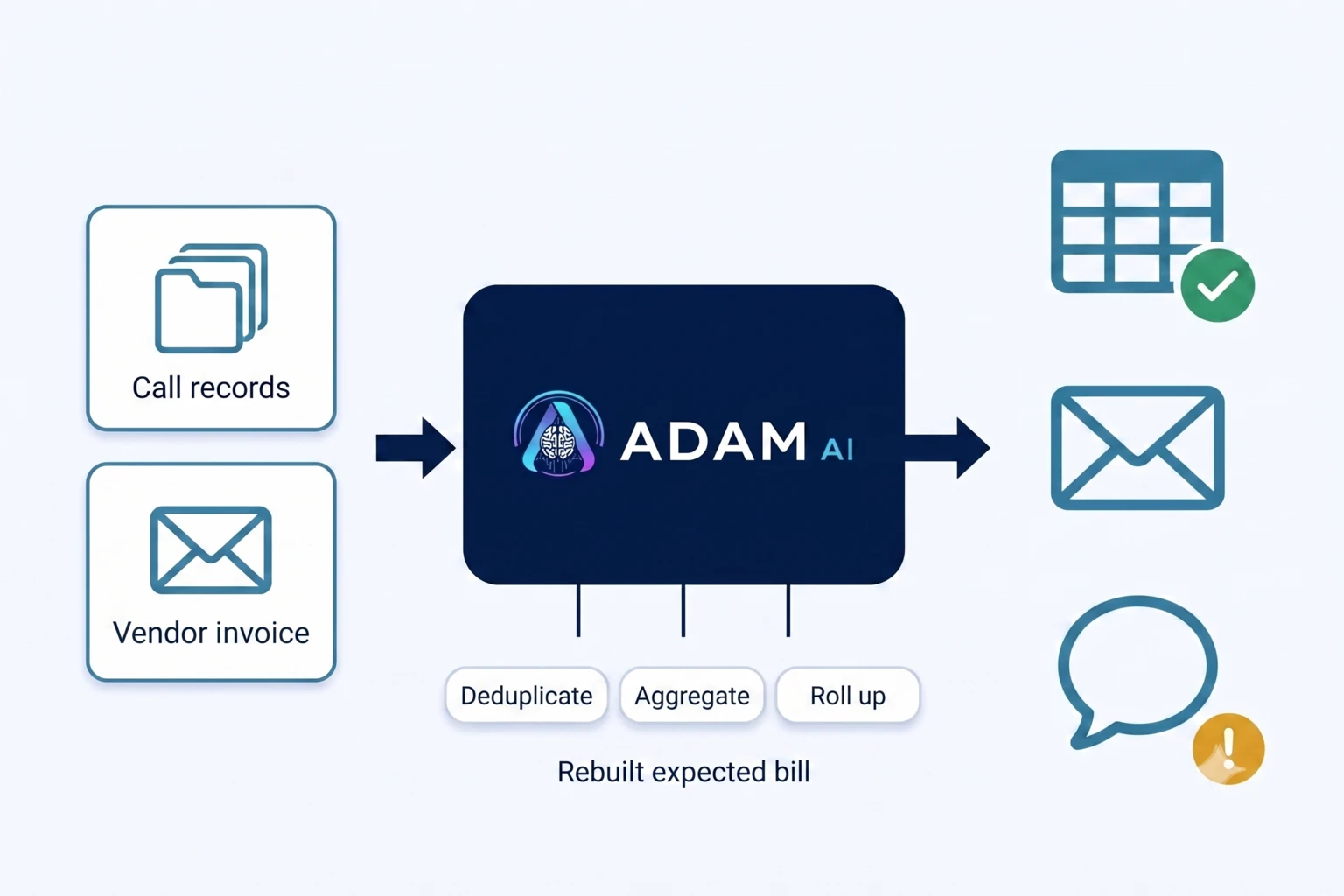
Reconcile carrier invoices against a bill rebuilt from your own call records, per vendor per billing period.

Telecom carriers
Call records and a vendor invoice feeding into ADAM, which deduplicates, aggregates and rolls the calls up into a rebuilt expected bill, with results going to a spreadsheet, an email report and a messaging digest

Garages and workshops

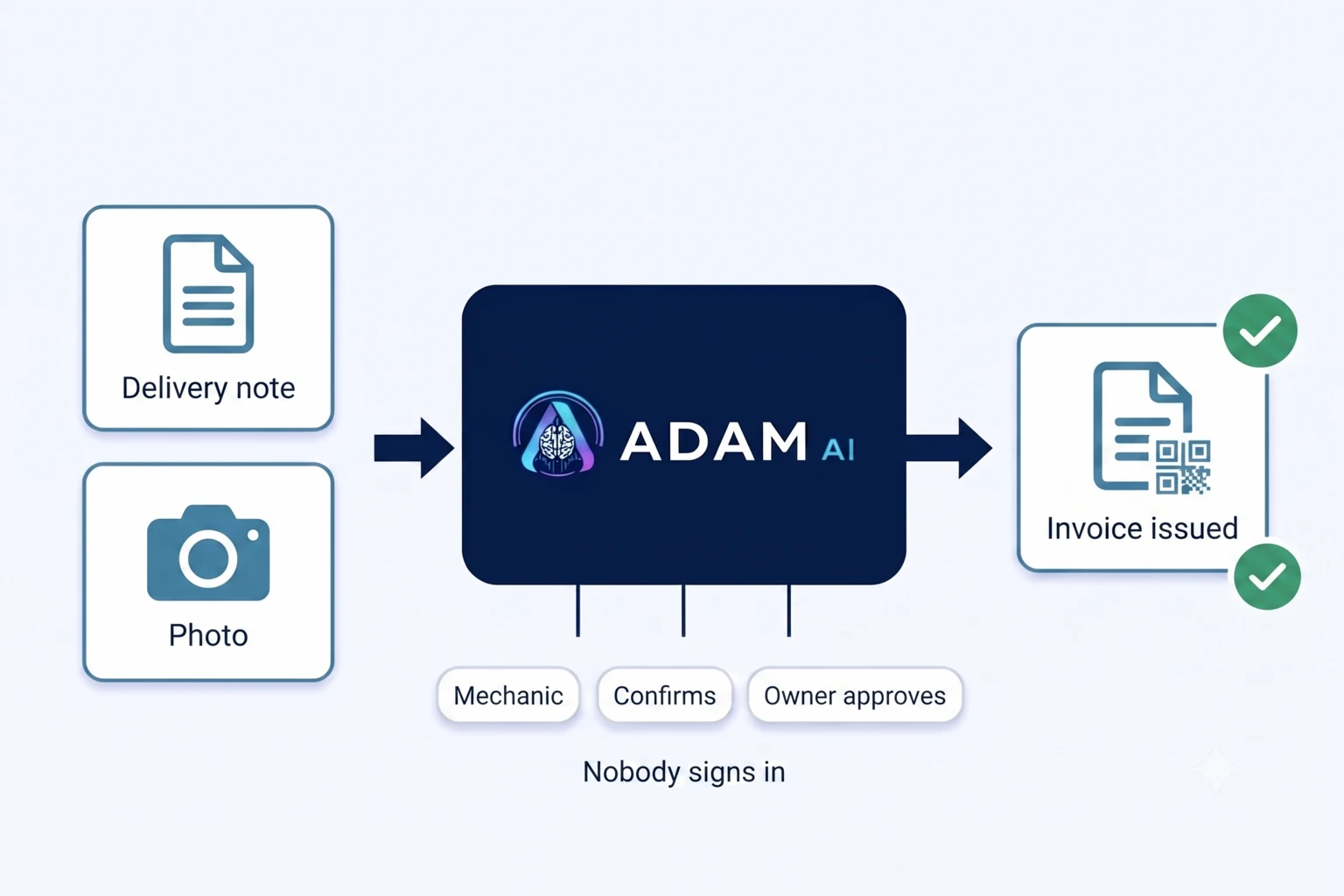
Keep parts stock current from delivery notes, then issue the invoice in three taps and no logins.

Garages and workshops
A delivery note and a photo feeding into ADAM, with a mechanic, a confirmation and an owner approval underneath and nobody signing in, producing an issued invoice

IT hardware distributors

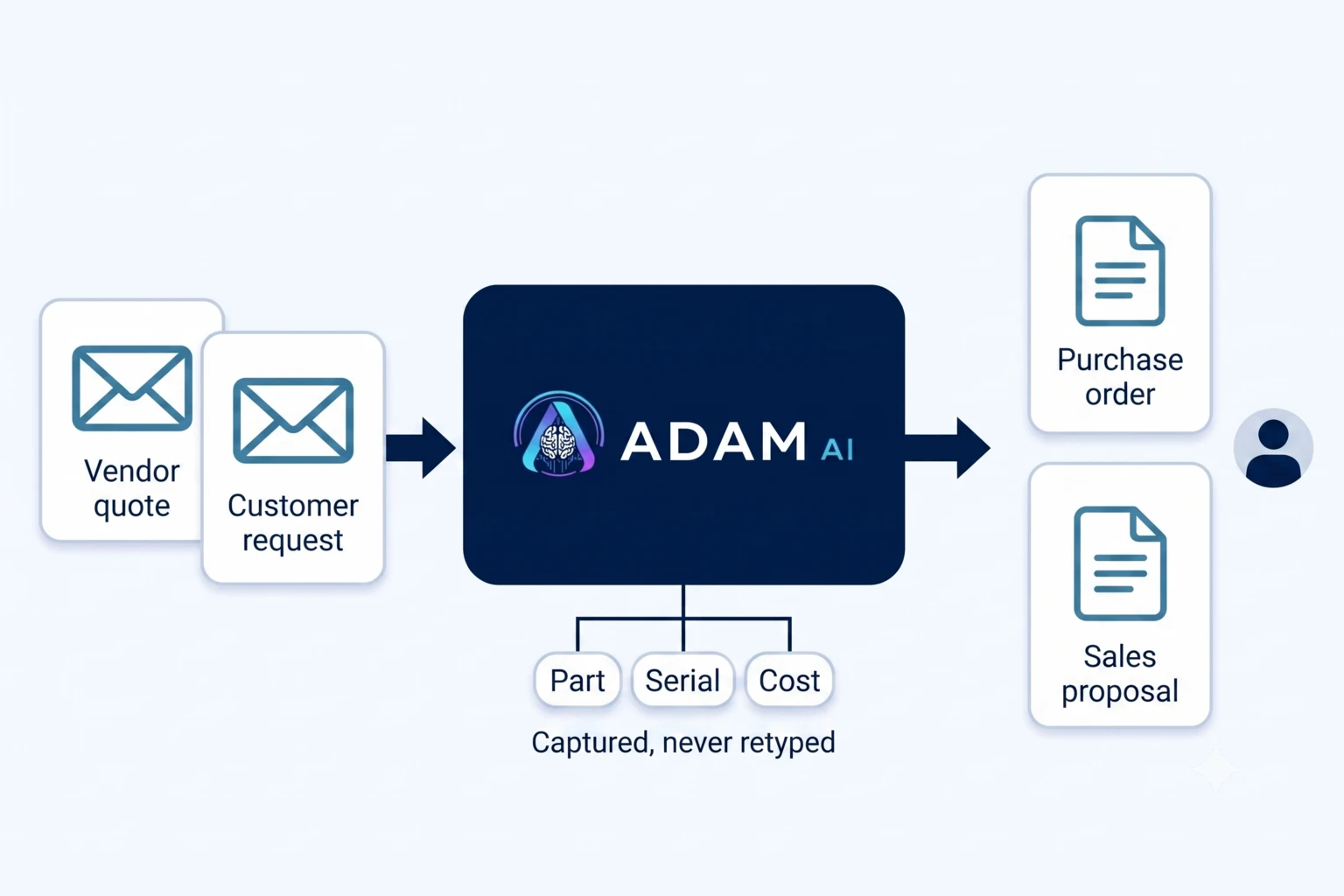
Turn forwarded quotes into a purchase order or sales proposal in your own system, without retyping a serial number.

IT hardware distributors
A vendor quote and a customer request forwarded into ADAM, which captures part, serial and cost without retyping, producing a purchase order or a sales proposal for one person to send

ADAM meets your data where it already is

Documents reach ADAM the way your suppliers and colleagues already send them: forwarded email, a message with a photo attached, PDFs, scans and spreadsheets. Nobody has to log into a portal, and no supplier has to change how they invoice you.

Where the data lives in a system rather than a document, ADAM can collect it from there instead. That includes a secure file drop you already publish to, a shared cloud folder, or a scheduled API pull from a platform you already run. That last one carries the most weight: an internal record from your own billing or ERP system becomes the expected figure a supplier invoice is tested against, so the check runs on your numbers rather than the vendor's. Each API connection is built for the system in question rather than picked from a catalogue.

Results travel the same way in reverse. Reconciled rows land in the spreadsheet your team already works in, exceptions arrive as an emailed report or a messaging digest, and where a finished record belongs in your own system, ADAM can write it there once a person has approved it.

Template OCR vs general document AI vs ADAM

Real documents test capture technology before reconciliation even begins.

Document capture technology comparison
FeatureTemplate OCRGeneral document AIADAM Data AIADAM
Handwriting on a printed lineNeeds a templateReads itReads and validates it
Rotated phone photosOften failsReads themReads and validates them
A layout never seen beforeNew templateReads itConfigured document type
Line items continuing across a page breakOften splits rowsExtracts rowsJoins continued rows
Comma decimal separatorsField ruleVariesNormalises consistently
dd.mm.yyyy datesField ruleVariesNormalises consistently

Reading the document is the easy half. The work is in matching delivery notes to invoices.

See ADAM work on your own documents

Forward a real invoice or delivery note to our demo inbox, or send it on WhatsApp, and watch ADAM extract and match it in minutes.